
 FLUTTER
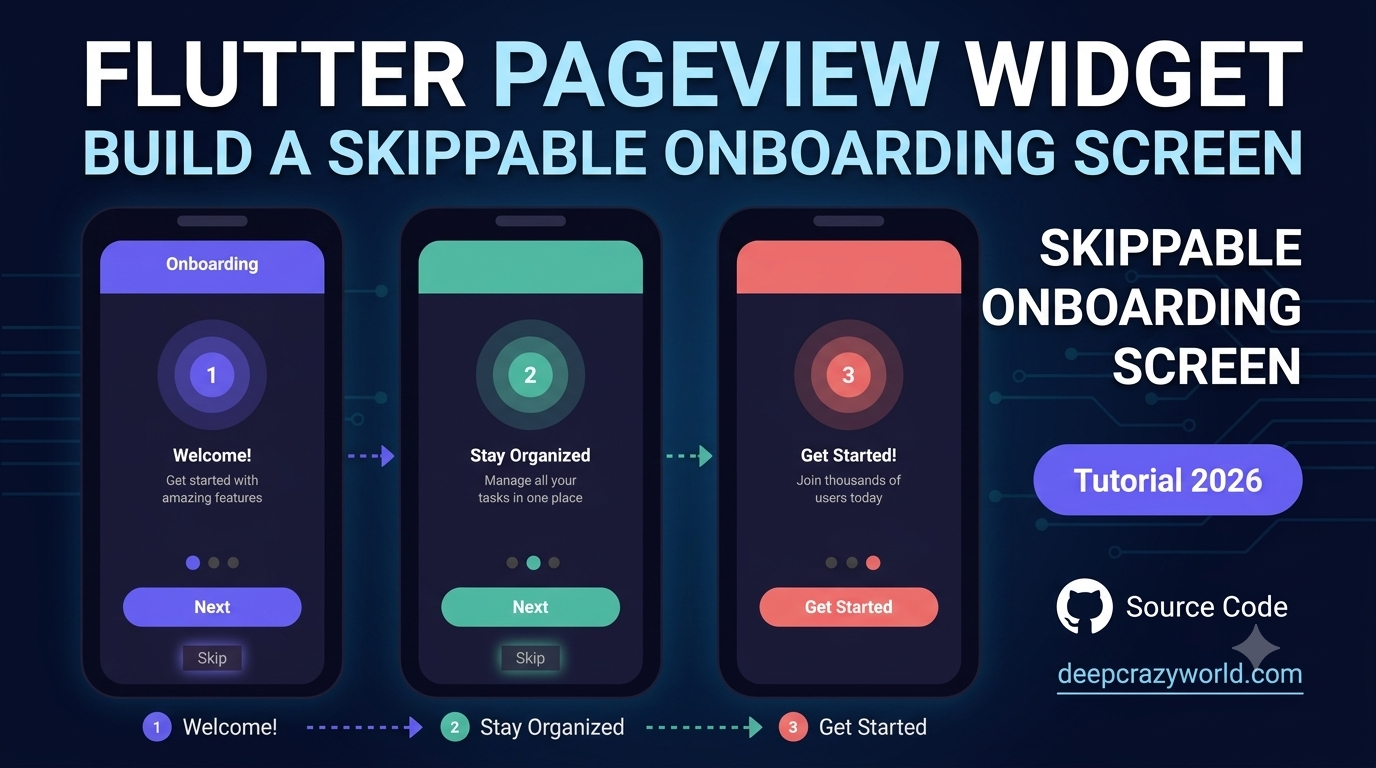
Flutter PageView Widget — Build a Skippable Onboarding Screen
Learn how to use the Flutter PageView widget to build a skippable onboarding experience in 2026. Complete guide with full source code and step-by-step.
Download instantly. No fluff, pure value.
 70% OFF 🔥 Bestseller
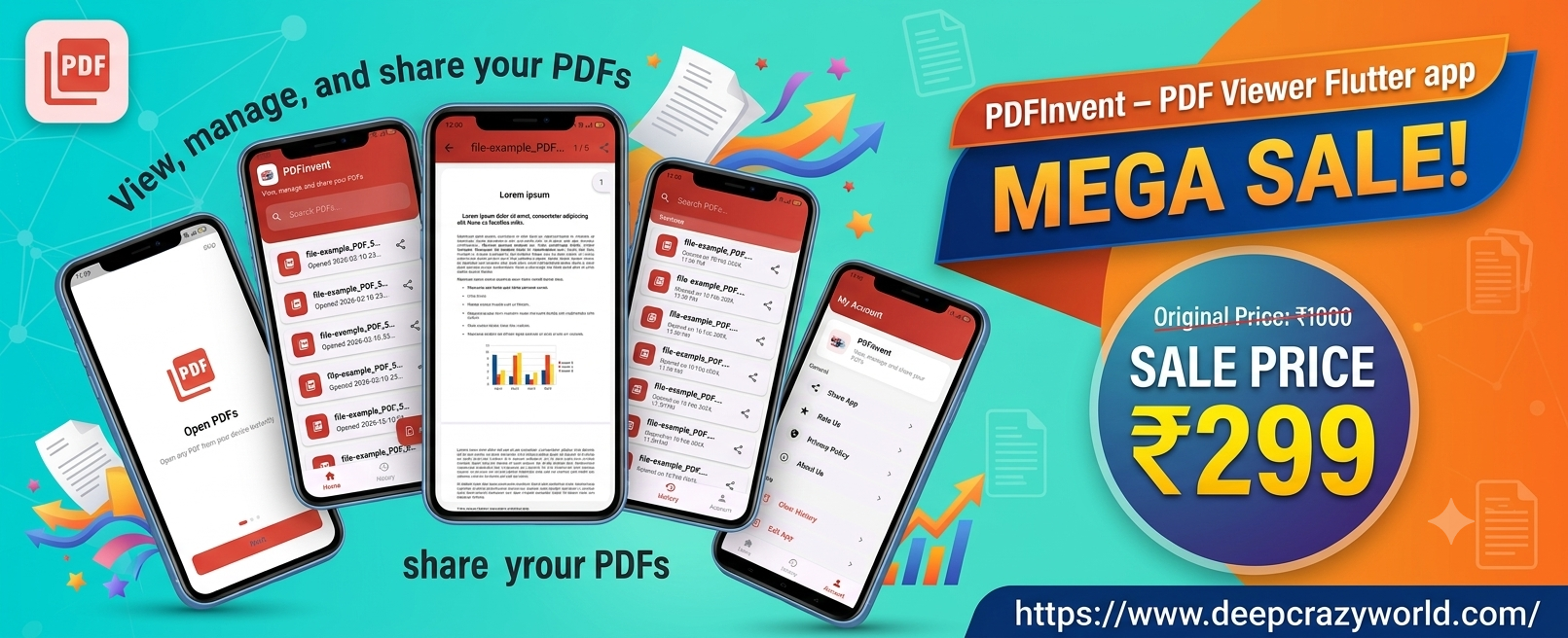
Buy PDFInvent Flutter PDF viewer app source code — live on Play Store, available for just ₹299 for a limited time. Full customization available on WhatsApp.
 72% OFF 🔥 Bestseller
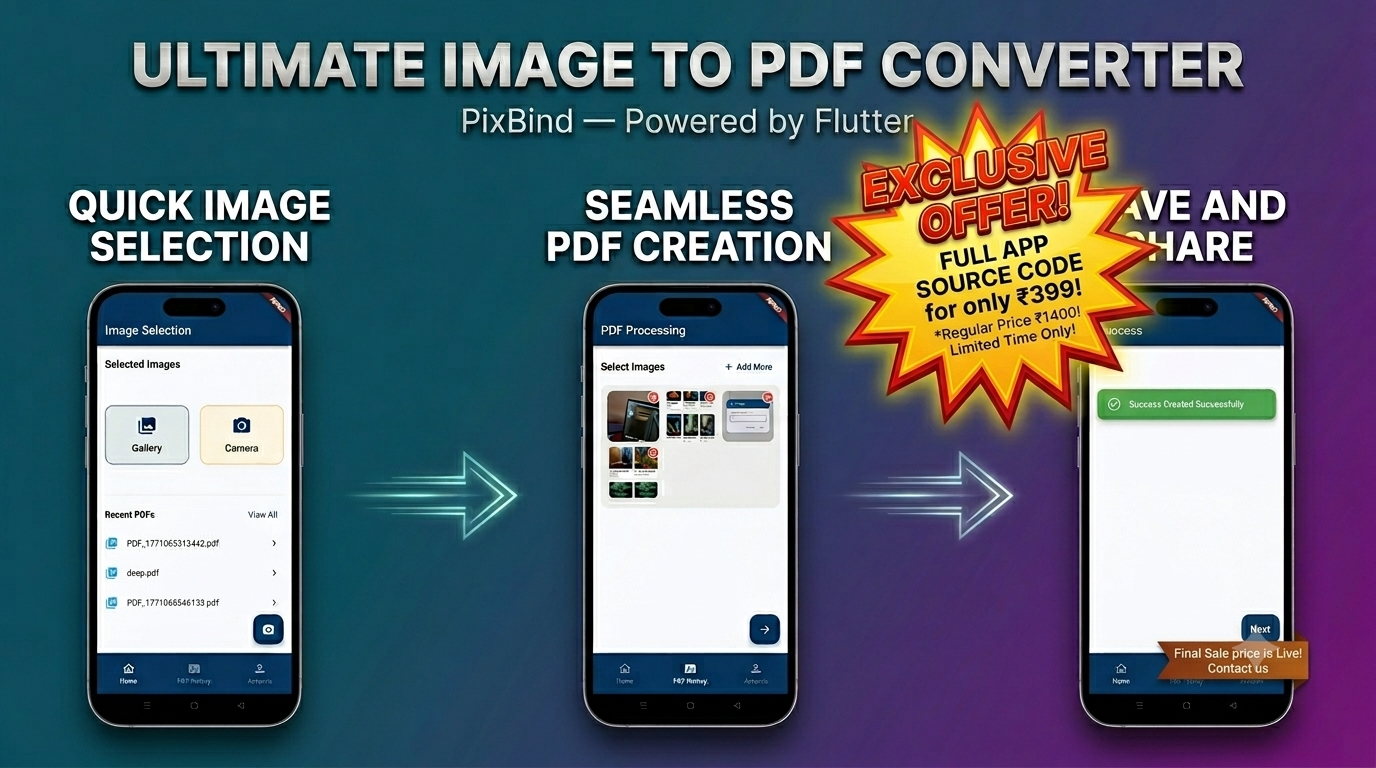
PixBind is a live, Play Store-approved Flutter Image to PDF converter app with a clean, production-ready source code available for sale. Convert JPG, PNG, and JPEG images into professional PDFs — fully offline, privacy-first, and lightweight. Get it fully rebranded with your own logo, colors, and app name. Contact us on WhatsApp for pricing and demo.
 67% OFF
QRInvent is a lightning-fast, secure, and intuitive QR and Barcode scanner optimized for your everyday needs. Get high-accuracy results instantly on your Android device.
No clickbait. Practical posts on digital life, growth & money.
FLUTTER
Learn how to use the Flutter PageView widget to build a skippable onboarding experience in 2026. Complete guide with full source code and step-by-step.
 FLUTTER
Discover the top 10 global companies using Flutter in their production apps in 2026, including Google, Alibaba, BMW, and more. See why big brands trust Flutter.
 FLUTTER
Planning to launch a Flutter app in China in 2026? Learn about Chinese app stores, payment integration with WeChat and Alipay, and compliance requirements.
 FLUTTER
Learn how to build a Flutter app for the US market in 2026. Complete guide covering UI standards, payment integration, App Store requirements, and compliance.
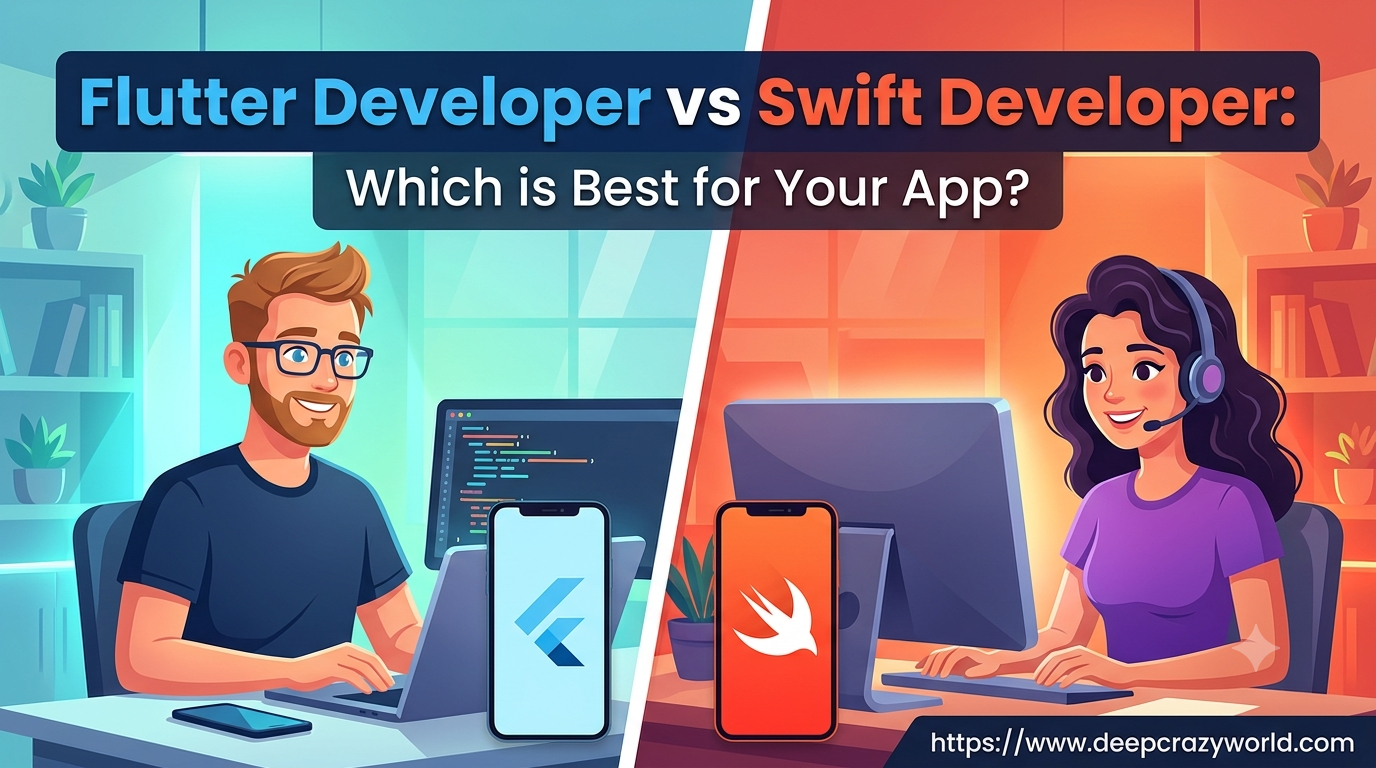 FLUTTER
Wondering about flutter developer vs swift developer? Compare cost, performance, and platform support to choose the best option for your mobile app in 2026.
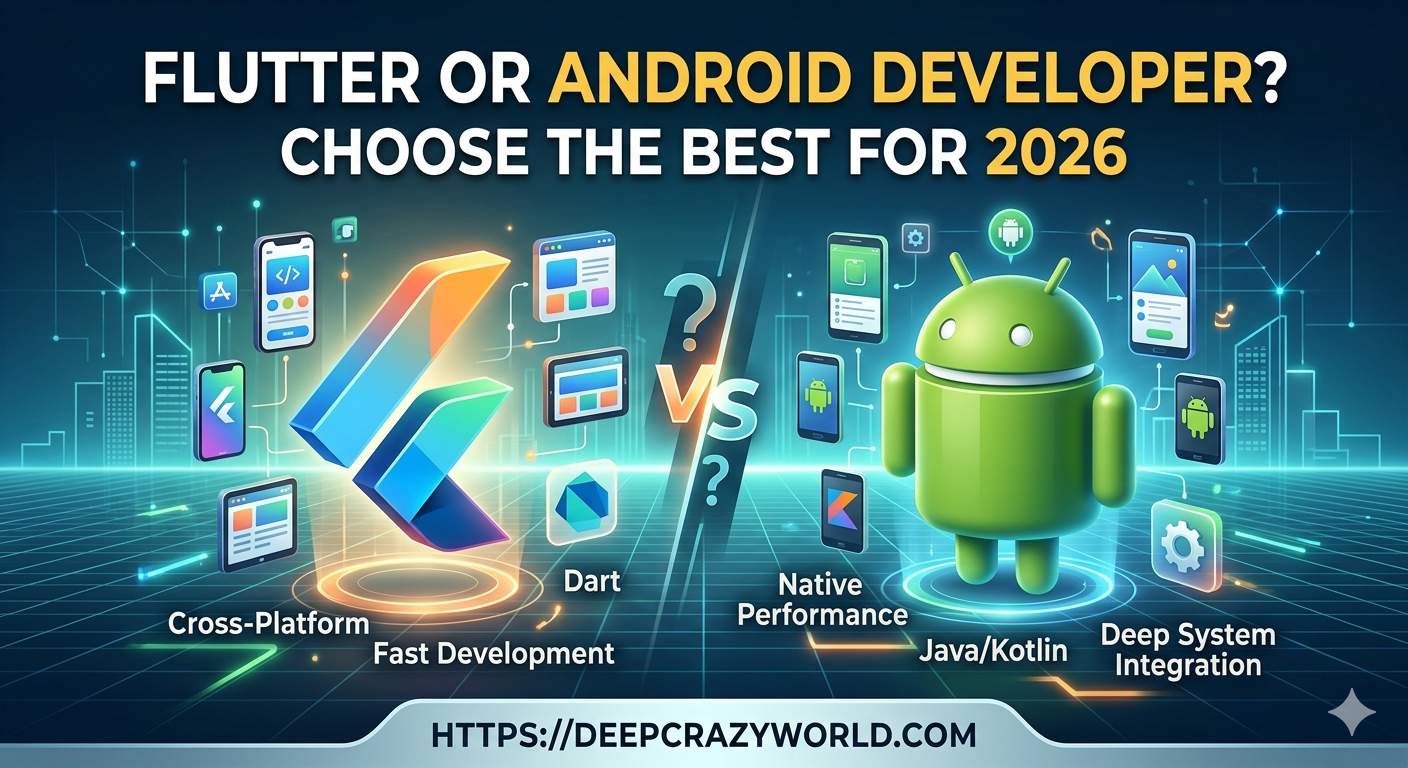 FLUTTER
Confused between an Android developer and a Flutter developer? Compare cost, performance, and platform reach to choose the best option for your app in 2026.
Latest videos — trending, honest, and actually useful.
 18 views
 17 views
 12 views
 10 views
 19 views
 15 views
Hi, I'm Deepika Mourya! A passionate Mobile App Developer from Delhi, India, specializing in Flutter and native technologies for Android and iOS. I am the creator behind two platforms built to help developers learn, grow, and build amazing things.
DeepCrazyWorld is my blog where I share in-depth articles, tutorials, source code, and development guides covering Flutter, Android, iOS, PHP, SEO, and much more. Whether you are a beginner looking for your first project or an experienced developer searching for quick references and source code — DeepCrazyWorld has something for you.
The content course is in Hindi — that made all the difference. Already got 3000 new followers!
Finally a creator who doesn't sell dreams. Her ebook gave me an actual roadmap to follow.
Great quality templates and very responsive support team. Will definitely buy again from DeepCrazyWorld.
Video course mein practical examples diye gaye hain — bahut helpful for beginners like me!
Honestly one of the best digital product platforms I have used. Clean, simple, and effective.
Loved the Canva templates! Saved me hours of design work for my Instagram page.
Deepika ke videos genuinely motivating hain. Content creation ke baare mein clarity mil gayi.
Customer support replied within an hour and helped resolve my download issue instantly. Great service!
Quality content at affordable prices. The brand building ebook was exactly what I needed to get started.
Join thousands who get Deepika's weekly newsletter — tips, free resources, and first access to new products.